
Basement insulation in Mandan ND - a warmer basement with dry foundation walls
Cold floors downstairs, a damp smell, or a power bill that keeps climbing? Any water gets fixed first, then we insulate the walls.
Request an estimate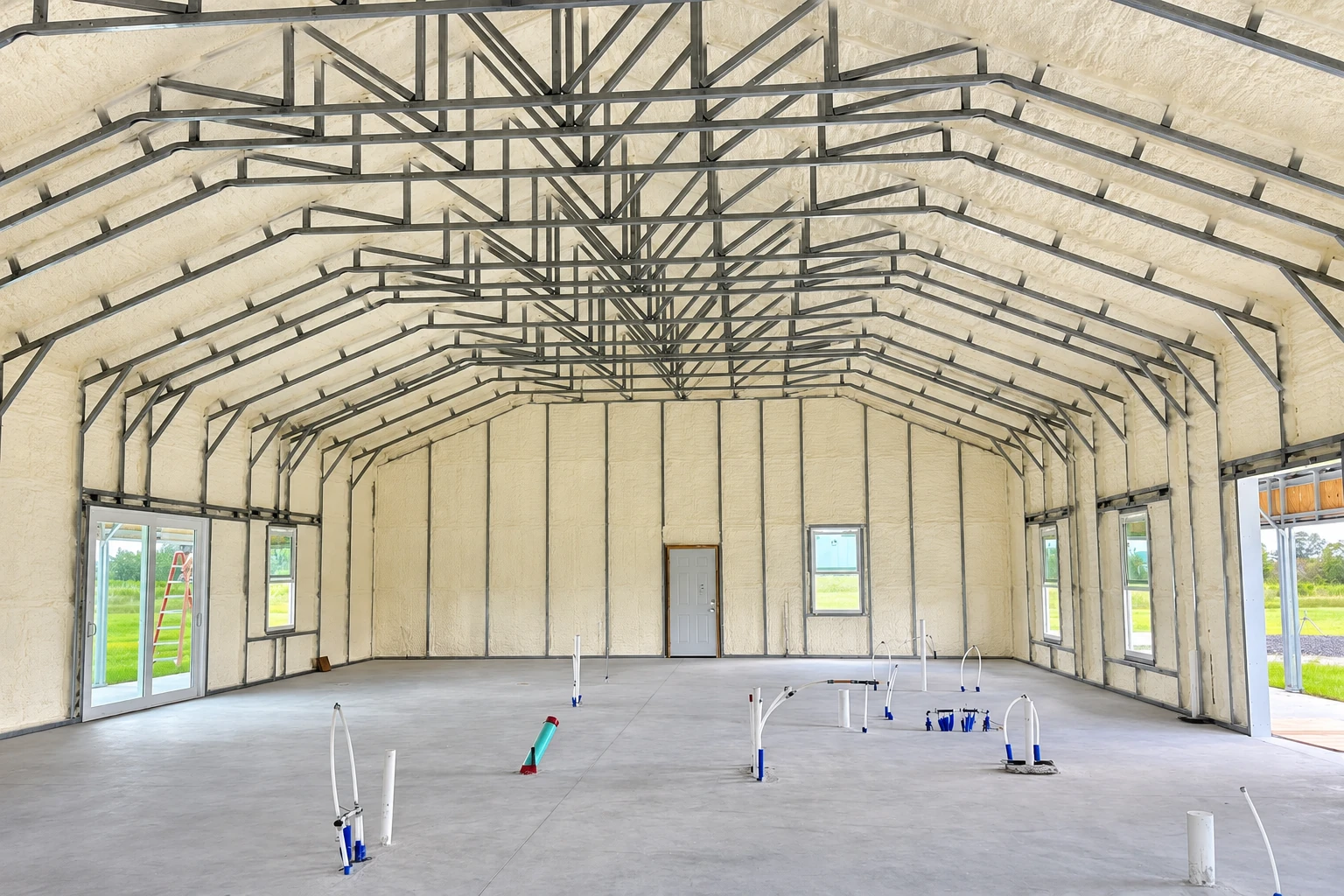
How do you insulate a basement so it stays dry?
Basement insulation in Mandan adds a layer to your foundation walls, on the inside or the outside, so the lowest floor of the house holds its heat and the walls stay drier. Done in the right order, it starts with checking for water and ends with a wall that's ready to finish or leave as it is.
Most calls start with cold floors, a basement nobody wants to sit in, or a power bill that climbs once the furnace kicks on, and some come from people about to finish the space who want the walls right before the drywall goes up. The price moves with how much wall you have, what's on it now, whether old insulation has to come out and which material goes on the foundation, while the schedule mostly turns on whether there's water to deal with first and when an inspection can happen if the job needs one. If part of the house sits over a crawl space instead, that's crawl space insulation, and I can look at both on the same visit. Your own figure comes from the estimate, once I've seen the basement.
How we handle basement insulation, step by step
First I walk the basement and look at the walls, the corners and the floor line for stains and the white crust water leaves behind on concrete. If water is getting in, that gets fixed before we talk insulation, because damp walls ruin good material, and I'd rather tell you now than bury the problem behind a new wall. Once the walls are dry, we pick what goes on the foundation by how well it handles moisture, clean and prep the surface so the insulation holds tight to it, and seal the gaps around pipes, wires and the top of the wall so the new layer isn't fighting a draft. Then our crew puts it on and cleans up, so the basement is at least as tidy as we found it.
For the foundation itself, closed-cell foam insulation is the dense kind that blocks moisture and seals air in the same pass, so it's what I reach for on bare concrete or block, even though it costs more. Open-cell foam insulation is lighter and cheaper, but it lets moisture through, so we keep it for framed walls and ceilings away from the foundation.
What Mandan's rules mean for basement insulation
Mandan requires a permit to build, alter or repair a building inside city limits and out to 2 miles past them, and the city's Building Department handles residential permits. Whether insulating your basement walls needs one isn't something I'd guess at, so ask the department at 701-667-3230, or ask me and I'll find out. When a job needs a permit, we pull it and set up the inspections. This matters most with foam, because building code requires gypsum board over foam on basement walls as a thermal barrier, a covering that keeps fire off the foam, so plan for that board in your budget and your schedule.
We're based in Mandan and do a lot of work in Bismarck and the cities around them, and the basements we see in Mandan and Bismarck run from older block walls with a patched crack or two to poured walls in newer houses. Older block gets a closer look at the mortar joints before we plan anything, and newer poured walls usually take foam or board without much fuss.
What finished basement insulation looks like
Get a basement insulation estimate at your house
We'll get back to you within one business day to set a time to come look at your basement. The estimate is free and done on site, and there's no obligation to book.
(701) 299-5063Basement insulation questions from Mandan
How much does basement insulation cost in Mandan, ND?
Across the US, basement insulation usually runs about $1,500 to $6,500 per project, and that's the national picture, not our price. Where your basement lands depends mostly on how much wall there is and what goes on it, and the estimate gives you your own number.
What is the best insulation to put against a basement wall?
Closed-cell spray foam, because it gives the best moisture control of any insulation used on the inside of a foundation wall. Fiberglass or cellulose against the concrete can soak up a lot of moisture and stay damp for good, which is the last thing you want behind a finished wall.
Should basement insulation go on the inside or the outside of the foundation?
For most houses it goes on the inside, because that side is easy to reach without digging. Outside insulation controls moisture and saves energy too, and in very cold regions it also protects the foundation from freeze-thaw, the repeated freezing and thawing that works at concrete, but it isn't meant for areas with termite problems and it has to be kept dry while it goes in. The outside makes more sense when the ground around the house is already dug up.
Do I need to insulate the rim joists in my basement?
Yes, when the rim joists, the band of wood sitting on top of the foundation, are part of the line between the heated house and the outside, they should be insulated along with the walls. In a basement you heat, that's usually the case, so we plan them in.
What causes basement wall insulation to fail?
Moisture, most of the time. Many inside upgrades fail when they pair insulation that air moves through with framing that doesn't handle damp and a vapor retarder on the room side, and plastic sheeting over fiberglass or cellulose traps moisture in the wall and makes the dampness worse. Ask any contractor which of those their plan includes.
Does a contractor need a North Dakota license to insulate my basement?
Yes, North Dakota requires whoever does the work to hold a North Dakota contractor license when the job's cost, value or price is over $4,000. That includes subcontractors and contractors from out of state, so ask anyone you're considering for theirs before you sign.
Book a basement look in Mandan
Call (701) 299-5063 or send the form before the basement gets framed or finished, while the walls are still easy to get at.